
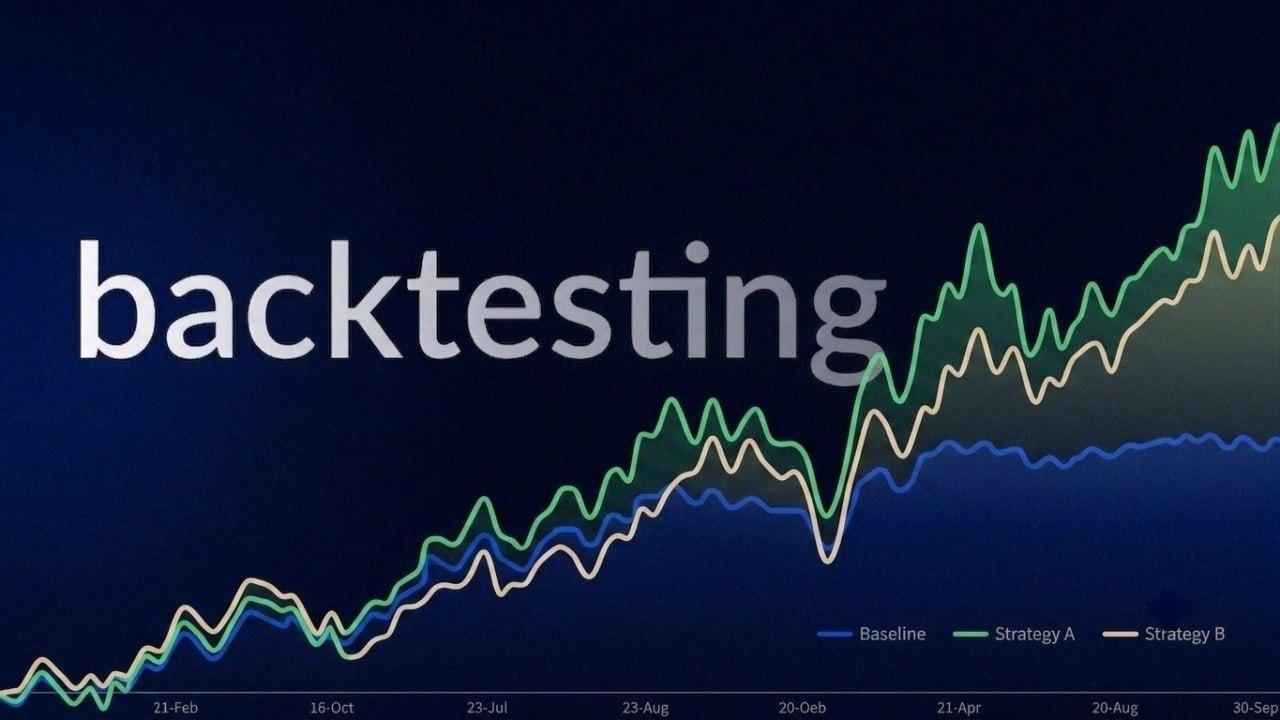
It's surprisingly easy to build a strategy that looks great on historical data. It starts with hours spent tweaking a strategy until the backtest looks perfect. You find that one specific combination that delivers massive profits and a beautiful equity curve. But in reality, you might just be fooling yourself.
The market doesn't care how good your backtest looks if it only works with one specific set of parameters. If your strategy needs everything to be exactly right just to turn a profit, it will likely fall apart within days of going live. The market gives immediate, honest feedback the moment real money is on the line.
At QuantYog, we believe the goal of backtesting isn't to find the best-looking results, it is to find the most robust ones. A robust strategy continues to perform across different parameter values, time periods, and market conditions, rather than relying on one perfectly optimized setup. We'd much rather trade a strategy that delivers consistent performance than one that produces spectacular results only in a single backtest.
Building a robust strategy means accounting for slippage and transaction costs, validating performance out of sample, and verifying that the edge persists across multiple assets. This is what separates a professional Quantitative Research process from guesswork. Instead of optimizing for the perfect backtest, you build strategies that are designed to survive real market conditions. After all, the goal isn't to make yourself feel good today, it's to build a system that still works tomorrow.